


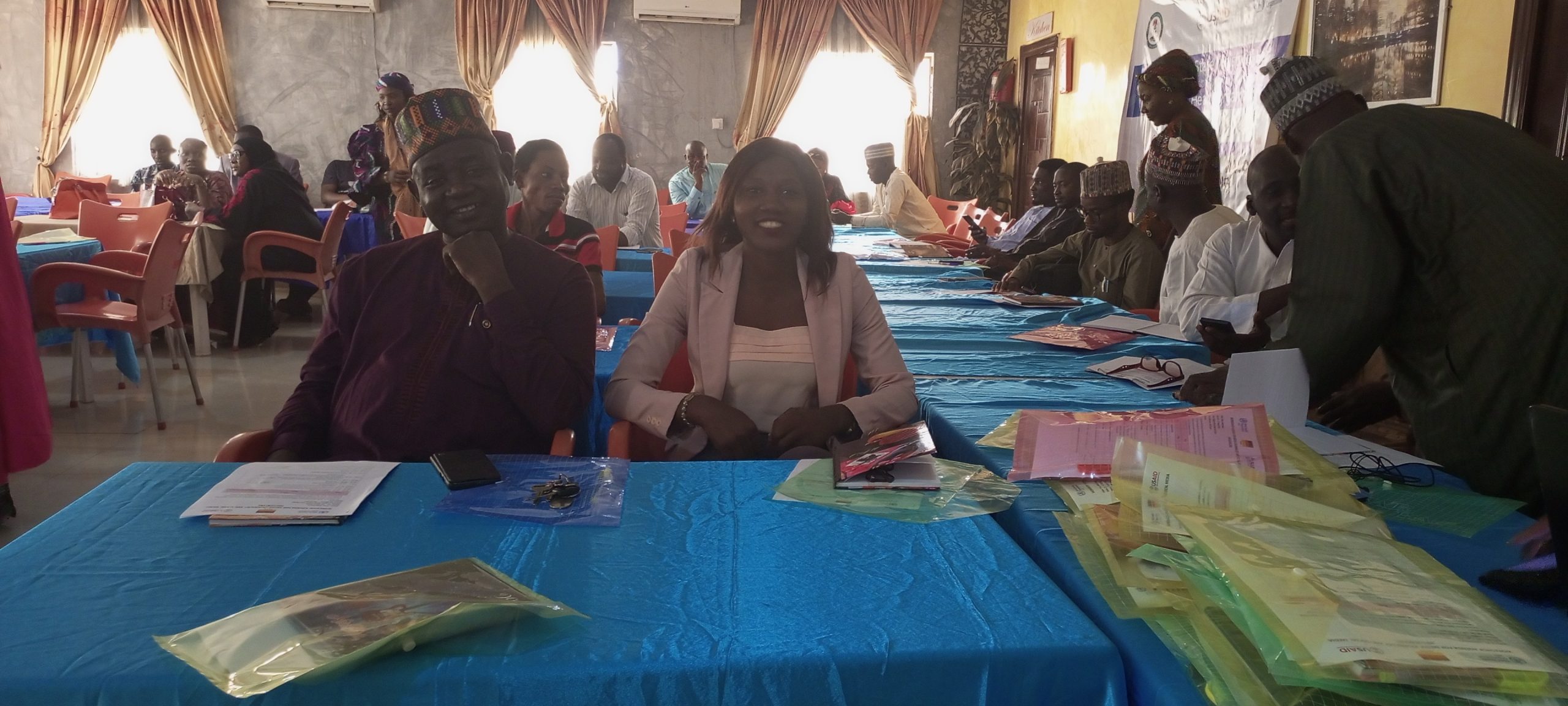
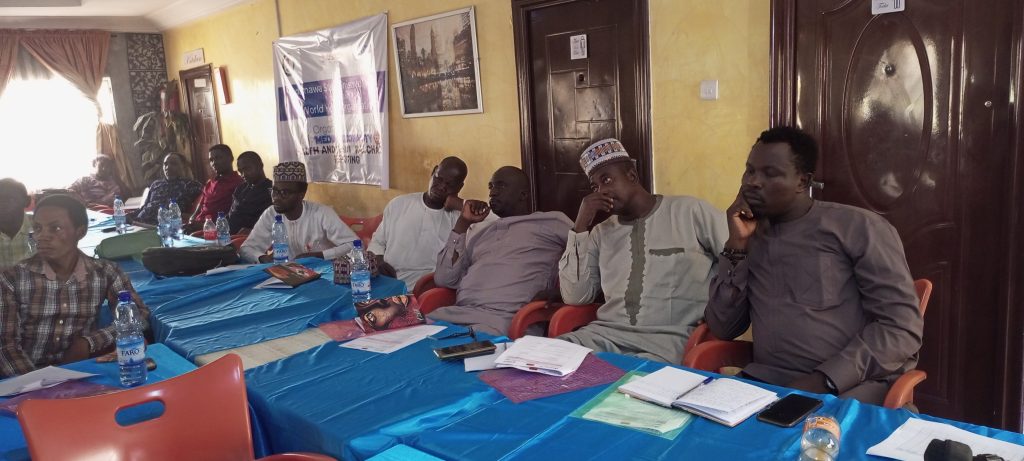
The Adamawa State Ministry of Health in collaboration with World Health Organization (WHO) has organized a three day workshop on ‘Health and Behavioural Change Reporting’ for Journalists and Social Media Influencers in Yola, the Adamawa State.
Participants for the workshop were drawn from Print, Broadcast, Online and Social Media Influencers.
The Objective of the workshop is to improve skills of participants beyond mere informative reporting to health behaviour outcome reporting.
Others are to increase the preponderance of lifesaving information on the mass media and social platforms, so as to enable risk populations to take informed decisions to protect themselves from disease infection
Kingsley Igwebuike, WHO’s Communication Resource person
charged Journalists to imbibe the principles of Risk Communication while reporting an outbreak of a disease so as to curb the number of fatalities.
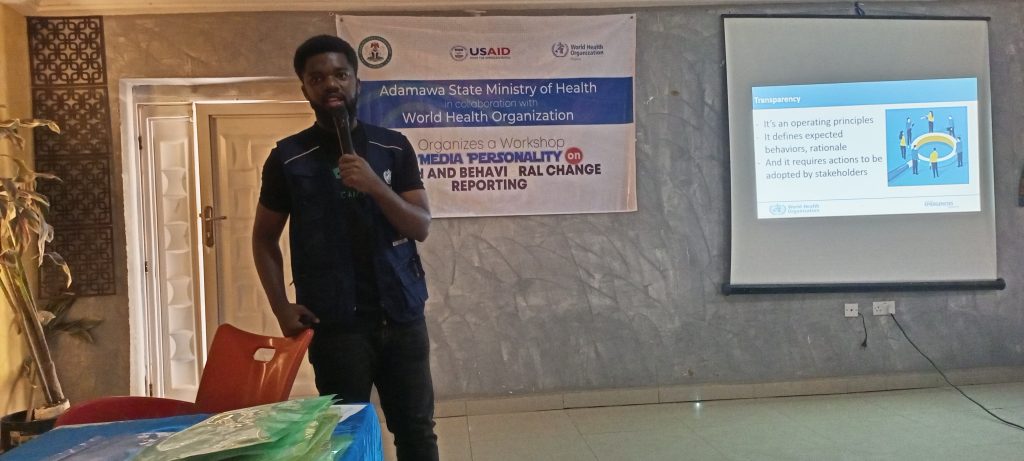
Meanwhile he noted that Journalists should be the first to report an outbreak of disease, but the report shall be factual, credible, and express empathy that will promote action.
Igwebuike added that Risk Communication creates stability and end crisis, which gives readers and listeners the confidence and willingness to take action and improve the credibility of the media outfit.
The resource person also stated that Media should also be transparent in their health reportage that will defines the expected behaviour or rationale of people which requires the adoption by stakeholders.
Dr Ahemen Terseer, Adamawa State Coordinator of the WHO in his presentation also explained, ‘what the public needs to know about the diseases.
He stressed the need for Journalists to proactively enlighten members of the public on the importance of personal hygiene and environmental cleanliness as basics for healthy living.
He called on the Journalists to focus their reportage on how people should change their behaviour in relation to health issues by being conscious of how they relate with others in the community which help in curtailing the spread of a disease.
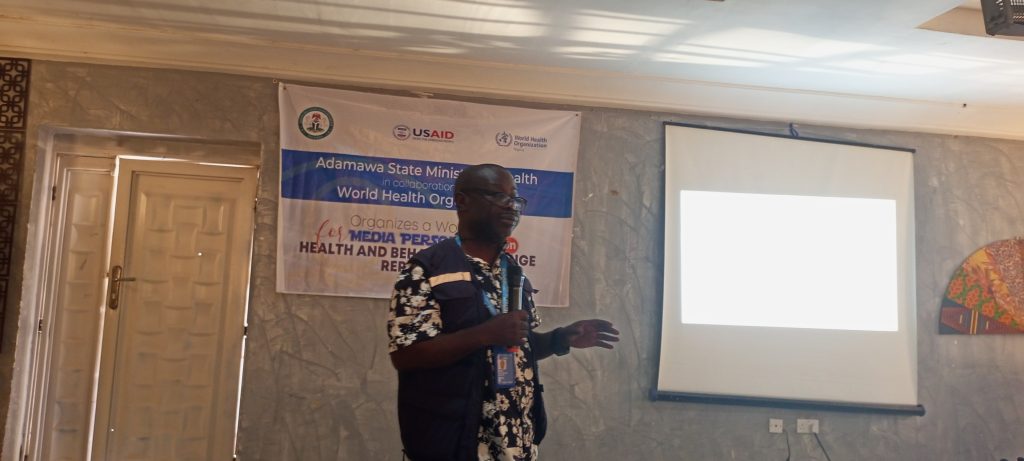
While presenting, Dr Isah Salisu another resource person also makes presentation on the ‘Overview of epidemic prone diseases in Borno, Adamawa and Yobe states to include Diphtheria, Monkepox, Lassa Fever, Cholera, Meningitis, Measles, and Yellow fever among others.
